The true home of each and every avadhuta is the gutter. Yet, not all avadhutas are to be found at the sides of roads draped in rags and covered in filth.
When we walk about avadhutas dwelling in gutters, it is not necessarily the physical, visible-to-the-naked-eye gutters that we are talking about. There is also an inner realm that may be called a gutter. It is the place where the harshest of patterns dwell, where suffering reaches its absolute peak, and the soul starts to cry out for salvation. This is where avadhutas do most of their work.
An avadhuta, who is sadasattva, or always pure, automatically operates as a purifying force in the world. An air purifier operates through the mechanism of an internal fan, which almost magnetically draws impurities in to be caught by its filtering system. Avadhutas are also like this. Avadhutas operate with a kind of magnetic force that draws people to them who are ready to be internally purified.
When you look at an active air filter, what do you see? Dirt. Thus, when we look at an avadhuta, what should we expect to see? Dirt. However, this dirt may not be physical. This could be people with very, very harsh patterns and highly distorted tendencies who have been drawn to the presence of the avadhuta to be consciously or unconsciously purified.
This is not to say that an avadhuta will be solely surrounded by sociopaths. A genuine avadhuta will also draw many highly matures souls into their orbit who are ready to receive the final push—who are ready to go through the final period of intense purification before being launched into the state of liberation. However, because of their purity, maturity, and stability, it may not be necessary for these beings to remain very close to the avadhuta on a physical level. Those who are most in need of the avadhuta’s physical presence are those who are most in need of purification.
The more subtle and pure we are within, the more subtle and pure our sadhana can be. There are some highly evolved beings—who are crossing the final stages of dissolution—who may not even appear to be doing any sadhana. They may just appear to be living in the world like ordinary beings. However, their sadhana is actually something that is going on within continuously. Because once we have recognised who we are—once we have recognised the essence of our existence—our sadhana naturally becomes just remaining in that state and letting that state naturally express itself in the world.
However, before we reach this high state, our spirituality usually has to take on a more formal shape. We may have to do many practices and, voluntarily, time and time again, deliver ourselves into the physical presence of masters in order to be purified.
Thus, if you have the fortune of meeting an avadhuta, don’t expect them to be surrounded by saints. The saints—who are actually advanced practitioners on the road to the state of avadhuta—will most likely be living quietly, doing their sadhana quietly, and serving the world quietly. They won’t be chasing gurus. They won’t be chasing anything at all.
The presence of highly impure beings around avadhutas may seem counterintuitive—but it is a fact. Just because we are temporarily impure, it doesn’t mean that we are unable to be possessed by the pull of the soul to become liberated from its impurities. We don’t know the journey of each and every soul. Even powerful souls may become temporarily, highly distorted and covered by impurities only to later have an epiphanic moment and begin the journey back home. A true avadhuta welcomes all beings regardless of where they presently stand. Before seeing temporary impurities and obscurations, a true avadhuta sees the soul—their own soul—that is coming back to them in another form to receive something. The job of the avadhuta is not to judge that person but to deliver what needs to be delivered.
When I think of my guru Mohanji—a sublime, unconventional, and unassuming avadhuta—I always think of his catchphrase: ‘I do my job.’ The meaning behind this is is that his work in life is simply to do what needs to be done—without procrastinating, without making excuses, or without compromising on the purity and the power of dharma.
Mohanji once told me: ‘You know, it is not easy being a guru. You have to deliver every single time.’
The meaning of this is that as a guru, you don’t have the luxury of saying no. You don’t have the luxury of seeing the vast storehouse of impurities sitting in a person who has come to you, and then sending them away in disgust or horror. As a guru, your job is to deliver as per the eligibly of the recipient. And eligibility is not something that is decided by appearances. Eligibility is something that is linked to karma—and karma is infinitely complex. In the world of karmic eligibility, a person who is, on the surface, the most impure, may in fact be the most eligible to receive the grace of the guru.
This reminds of the story of Shirdi Sai Baba and his spiritual successor Upasani Maharaj. Upasani Maharaj was always a strange, unconventional, somewhat difficult figure, and when he first came to Shirdi, he wasn’t even interested in taking Baba as his guru. However, despite all of this, Baba once announced to people that: ‘Such is his worth. The whole world may be put in one scale, and he in the other. He is merely to eat bread and vegetables and sit quiet. I shall accomplish what I want.‘ As far as we know, there was no one else who saw the potential in this apparently insignificant man. Baba saw this potential, drew him to himself, and within a few years, lifted him to his own stature.
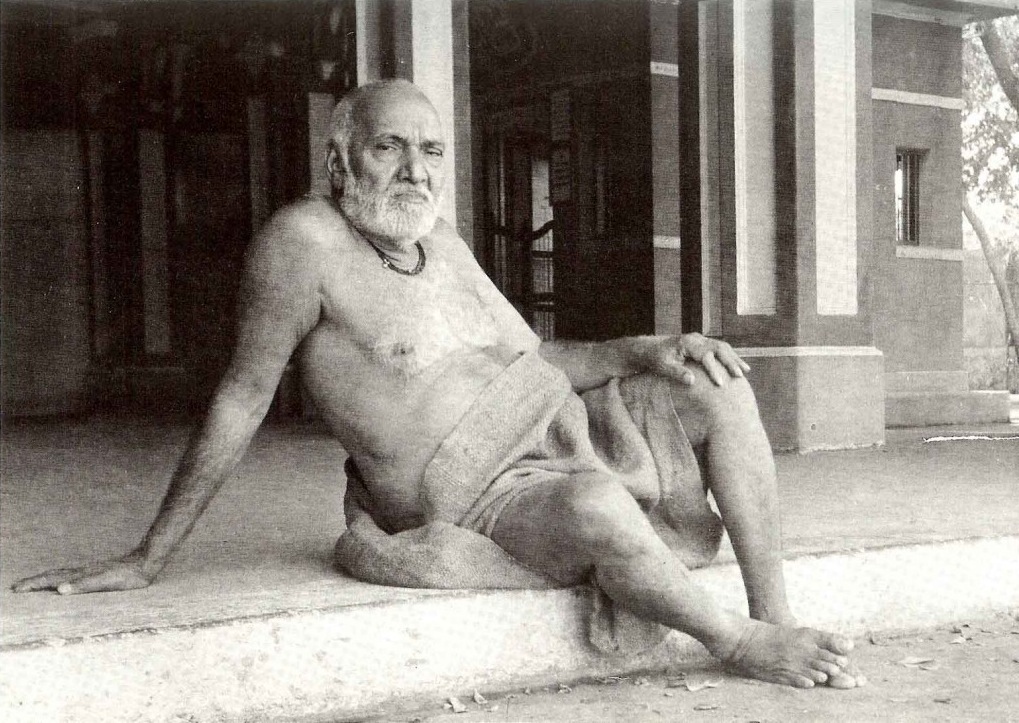
When it comes to great masters like Shirdi Sai Baba or Mohanji, there is no limited mind inside of them calculating and analysing who is eligible for what. Their grace flows automatically to whomever is eligible for it. Potentially, such powerful masters could make many masters like themselves, or even lift some to even greater heights than them. The problem is that there may not necessarily be a large number of people who have the eligibility to be lifted to that level.
We may point to things like humility, sincerity, and consistency as signposts for recognising eligibility, but in reality, there is always something unseen and mysterious about eligibility—about who is eligible for what. The best way to sum up this somewhat unfathomable essence of eligibility may be in the laconic words of Mohanji, who upon the urging of Avadhuta Nadananda, said this when he had been chosen to receive the title of ‘Brahmarishi’ and be installed in a significant position of power and responsibility in the Dattatreya Tradition: ‘I don’t see myself as different from anybody else. I’m chosen. That’s it.’
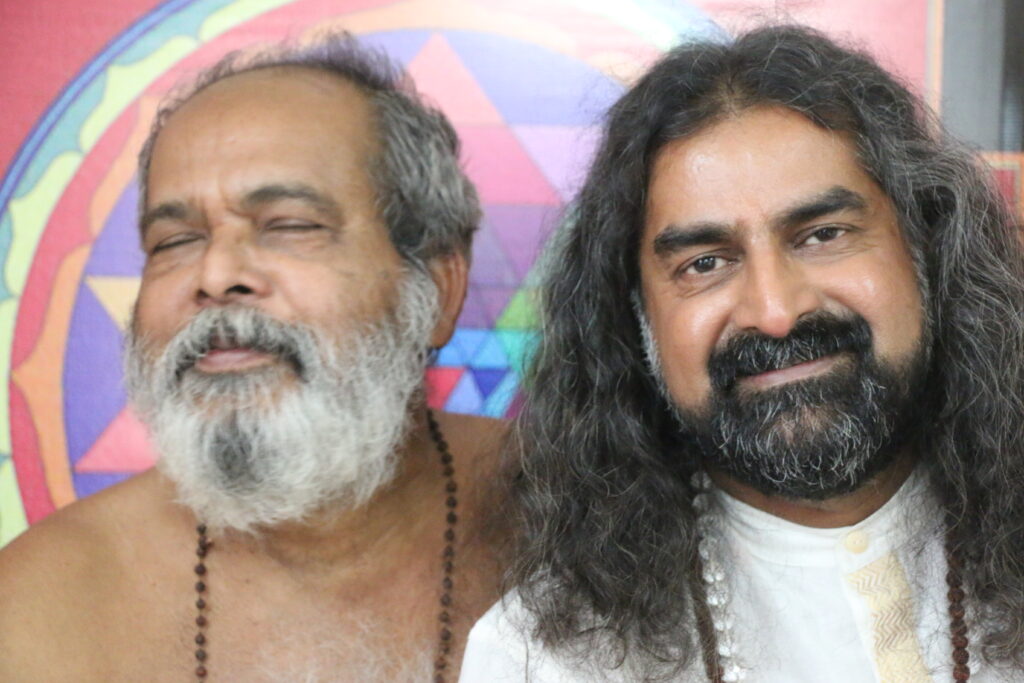
Avadhutas are chosen by life. Avadhutas are made by life to represent life. Avadhutas take certain forms in order to be relevant to a certain selection of people within a certain generation of time. Avadhutas give unthinkingly. Avadhutas do their job—always. They are the sweepers of the hearts of this world who sweep without thinking, without analysing, without planning, without judging. For them, their sweeping is not sweeping at all. They are dancing. They are dancing in the gutter. They are smiling in the gutter.
This article is dedicated to all of the luminous avadhutas, the sweepers of hearts, of past, present, and future.
With love, Jack.
__________________________________
Thumbnail image courtesy of @alamanga on Unsplash.
Read Part 1 of this article series here.
Read Jack’s Avadhutam series of books here.