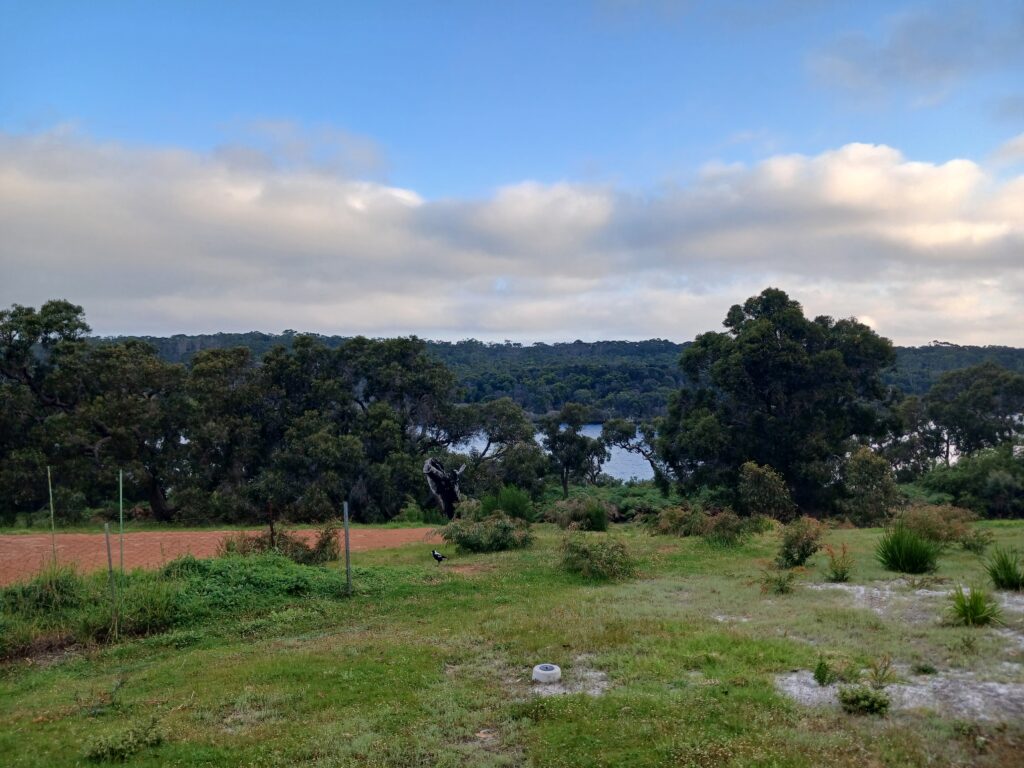
Earlier this month, upon the invitation of a friend, and with Mohanji’s blessings, I went to spend some time at the Mohanji Centre of Benevolence in Walpole, South West Australia.
Mohanji has classified the land at the MCB as a true deva bhumi.
What is a deva bhumi? It is a portal to the higher dimensions of existence. It is a place highly hospitable to the activities of celestial beings, the guru mandala, and both incarnate and disincarnate siddhas and avadhutas.
In short—a deva bhumi is a place where transformation happens simply by virtue of being there. When we additionally superimpose upon a deva bhumi activities that are benevolent in nature and spiritual practices that are inspired by a genuine longing for truth—then that deva bhumi becomes even more powerful.
This is what Mohanji has done at the Mohanji Centre of Benevolence Australia and all of his centres worldwide—he has discovered lands with ‘portal potential’, and then he has set in motion activities designed to open those portals wider and wider, to make the vortices of transformation in them more and more powerful.
This is why the animals who live at these spaces are treated as brothers and sisters—as family. This is dharma in action. We are all equal here. Nobody is higher or lower.
At these spaces, temples are created to act as main vortices of energy. The repeated performance of aarti invites and re-invites the presence of higher beings at the same times every day. And the performance of aarti is not just aimed at the deities who we are singing to, or to whomever happens to be there in person at the temple or space that day—the performance of aarti invites a whole host of different subtle beings who come to bathe in that light that is created by the invocation of the higher dimensions of existence. This is one of the ways that portals are made and preserved.
I visited there on the pretext of having a relaxing break from my ordinary work, spending time with friends, and giving a few talks about the avadhuta path, but I walked away with a tremendous sense of inner transformation, empowerment, and re-calibration of purpose within myself. This was the doing of Mohanji, whose presence is so vivid and powerful at the centre—specifically around his picture and lamp in the temple—that it is as if he is actually walking around there in person. Whenever I would go to sit near his picture, or even look at his picture, I would hear a message directed to me on a two entwined topics—dharma and destiny.
Before meeting Mohanji, I would receive messages from various different masters. Maybe they were hallucinations—I don’t know. After meeting Mohanji, all of the others masters stopped talking to me more or less. Mohanji became the mouthpiece of the Dattatreya Tradition to me—Mohanji became the shepherd guiding me towards my final destination in this life. Even though I am now usually physically far from Mohanji, and I don’t do any work with him or directly with his organisations—I still feel him with me constantly—guiding me and empowering me to do more for the world.
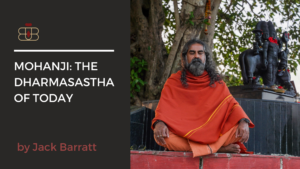
During my talks at the centre, I had a curious feeling that these talks are simultaneously absolutely Mohanji and absolutely Jack. What does it mean to be absolutely Mohanji? Who is Mohanji? Mohanji is the supreme consciousness embodied for a purely dharmic purpose. Mohanji is the combination of the Datta principle—the subtlest possible essence of existence—alongside the Dharmashasta principle, which is the manifested operational power that keeps the flame of dharma, of truth, of righteous living, burning on Earth.