
The Shri Datta Mahatmya was composed from the heart of a supreme avadhuta, Shri Vasudevananda Saraswati—revered across Maharashtra and Gujarat as Tembe Swami Maharaj (1854–1914). A lifelong sannyasin and tireless wanderer, Tembe Swami spent decades traveling through the sacred forests, rivers, and holy places of Maharashtra and Gujarat, guiding seekers by his example of renunciation, humility, and devotion. In 1901, during the chaturmas retreat at Mahatpur on the banks of the Narmada, devotees repeatedly insisted that he preserve the essence of Lord Dattatreya’s teachings in a form accessible to all. Moved by their requests, he composed the Datta Mahatmya, drawing upon his own transcendent realisation and the rich tradition and scriptural stories surrounding Lord Dattatreya’s incarnations.
From the very first verses, Tembe Swami makes clear that this work is not presented for literary acclaim or any personal recognition or renown. It is an offering of love, a garland of words destined to bring the living presence of Lord Dattatreya into the hearts of all who read or hear them. In the same spirit as earlier scriptural treasures such as the Shri Guru Charitra and Shripada Shrivallabha Charitamrutam, the Datta Mahatmya blends wisdom and guidance, philosophical insight, and illuminating stories. Lord Dattatreya is celebrated not as a nebulous spiritual abstraction but as the ever-present source of grace who moves through history–teaching by example, epitomising dharma, and drawing souls inevitably toward liberation. Datta Mahatmya exemplifies and exudes the humility of a great bhakti, allowing seekers across generations to experience the transformative presence of the Trimurti embodied in the wandering avadhuta. Even more than a century later, the Datta Mahatmya lives on as both a scripture and source of spiritual guidance, acclimating readers into the living current of Lord Dattatreya’s grace.
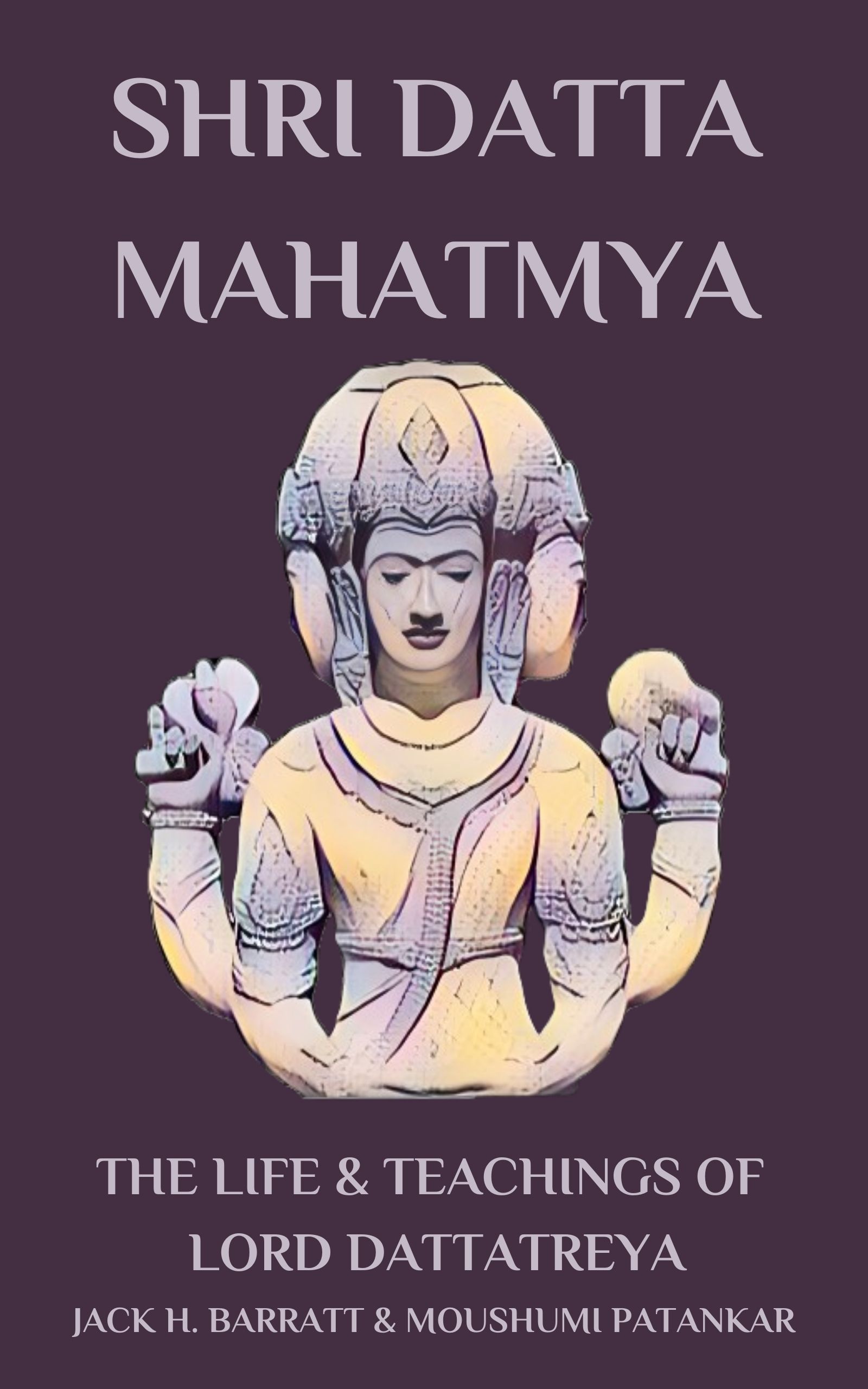
The Datta Mahatmya unfolds as a journey of the heart, beginning with an invocation and a gentle framing of Lord Dattatreya’s unsurpassable position atop the Guru parampara, situating the text squarely within the timeless cycle of avataric incarnation and grace. The early chapters present the navavidha-bhakti, the nine forms of devotion, establishing that the heart’s surrender is as vital as scriptural learning and is, together with surrender of the mind, body, material wealth and worldly pursuits, the foundation upon which all spiritual life is built. Here, the heart’s devotion is placed on equal footing with scriptural study, emphasising that love and surrender open the doors to liberation.
From there, Tembe Swami guides readers through a sequence of vivid stories and dialogues: the steadfastness of the devout wife, the manifestation of the Trimurti as a single, compassionate presence, the deeds of Kartavirya Arjuna, and the victories of the gods achieved through Lord Datta’s blessing. These accounts are interwoven with practical reflections on dharma, detachment, and the pitfalls of ego, offering a continuous thread of wisdom-transmission underlying the narrative text.
The text is also contemplative, an offering of parables and wisdom that serve as a continuous reminder of Lord Datta’s role as the inner Guru—ever present, yet beyond form. Key chapters describe the twenty-four gurus drawn from nature, illustrating that all creation can become a mirror of the absolute when viewed through the eye of wisdom. Interspersed hymns, including Tembe Swami’s own Karunatripadi and Rang Avadhut Maharaj’s beloved Datta Bavani, allow the reader to enjoy stories about Lord Datta’s greatness as well as direct expressions of praise for Lord Datta. The closing sections tie the threads of story and devotion together into a devotional encomium of Lord Datta as the ‘soul of everything’. In this way, the book’s arc flows from outward narrative to inward realisation–from devotion to the incarnate Guru to realisation of the formless Self as embodied by the eternal avadhuta.
‘O Lord Dattatreya, I extend my hands in supplication. Please keep this text in your constant presence.’ — Tembe Swami’s prayer at the outset of Datta Mahatmya (p. xxii, Introduction)
‘Whom should I be afraid of? Fear comes when there is another person. But when there is no other person, whom should I be afraid of? You and me are both brahman. There is no difference between you and me.’ — Rang Avadhut Maharaj (pp. xxvii-xxviii, Introduction)
Shri Datta Mahatmya by Tembe Swami Maharaj, Translation by Moushumi Patankar, Editing and Translation by Jack H. Barratt (Eternal Stream Publications, 2024). Available on Amazon here.
Marathi readers: Shri Datta Mahatmya Bhaktisar (Tembe Swami, traditional verse) or its prose Kathasar version for easy reading.
Approach as sravana and manana (listening, reflection) rather than casual reading.
Read daily or in a seven-day parayana; Thursdays (Datta’s day) are auspicious.
Keep the text respectfully near your shrine or image of Lord Datta; offer a simple light or incense.
After each session, sit quietly for a minute, letting the message settle.
Group readings, especially of Karunatripadi and Datta Bavani, often lead to a heightened spiritual atmosphere.